
One of the things that strikes me most when I read about diabetes research is that many times advances do not consist of finding a cure overnight, but rather in better understanding how our body works.
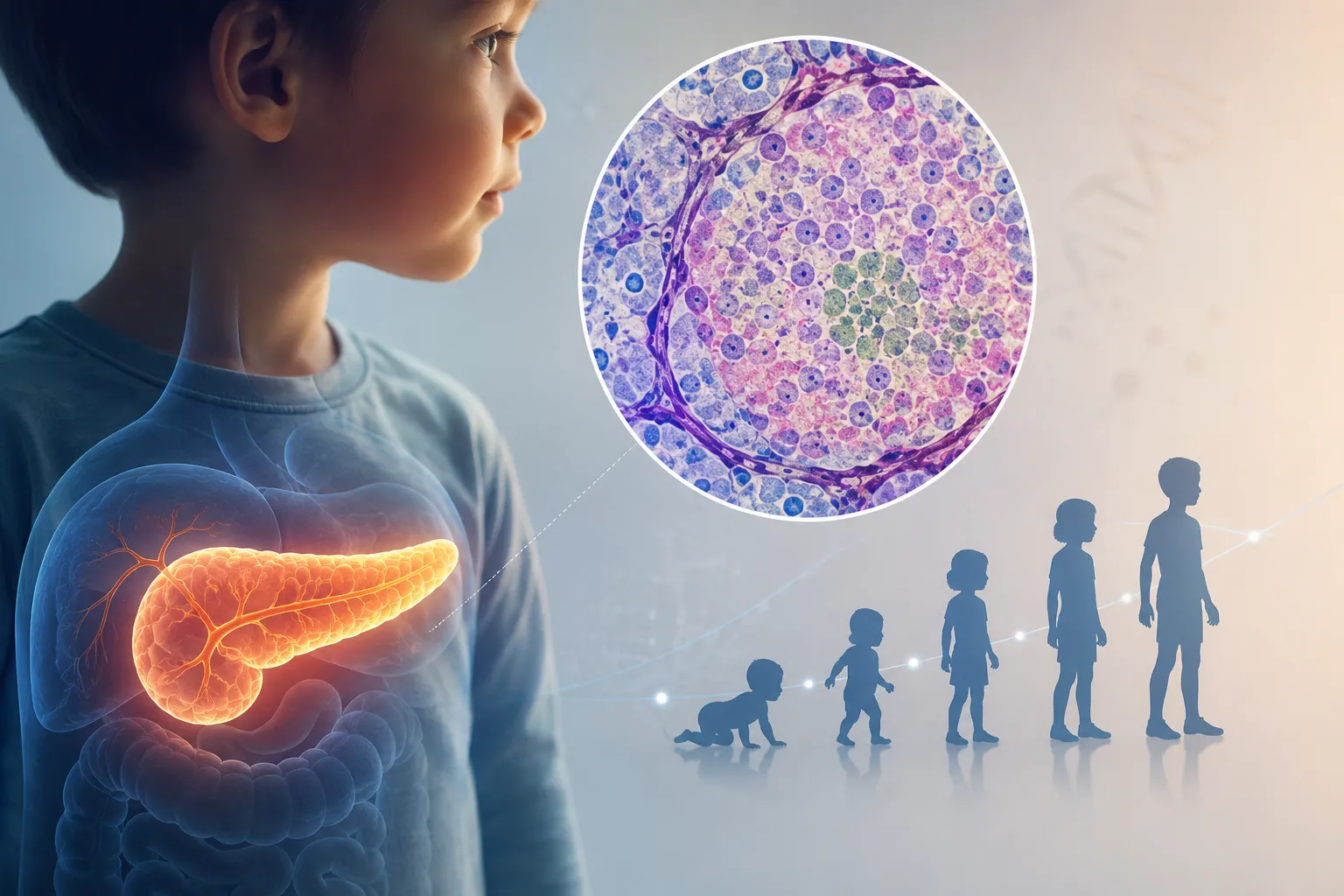
And that is precisely what a group of researchers has achieved by creating the most detailed map to date of the development of the pancreas during the first ten years of life.
Why is it important?
Because the pancreas is the organ responsible for producing insulin thanks to the beta cells found in the islets of Langerhans.Understanding how these cells are formed, how they grow, and how they mature can help discover why some people develop diabetes and others do not.
To achieve this, researchers studied the pancreas of 123 children donated for research after dying from causes unrelated to diabetes.Thanks to this gesture of enormous generosity on the part of their families, today we know much better how this organ evolves from birth.
Among the most interesting findings is that the size of the pancreas at birth can vary up to four times between different babies.Scientists believe that this difference could become a biomarker in the future to identify an increased risk of developing type 1 diabetes.
They have also observed that beta cells multiply especially before birth and during the first years of life.Afterwards, its ability to regenerate decreases much more than previously thought.This data helps explain why protecting these cells from a very early age can be so important.
Another encouraging discovery is the identification of possible precursor cells capable of generating new endocrine cells even after birth.There is still a lot of work ahead to understand its role, but it opens new lines of research on how to preserve or recover the function of the pancreas.
In addition, this work has given rise to an open access digital atlas that will allow researchers from around the world to compare healthy tissues with those affected by different diseases and accelerate new studies.
Although this discovery does not change our treatment today, it does represent an important step towards a goal that we all share: being able to detect people at higher risk earlier, prevent damage to beta cells and develop increasingly personalized treatments.
Research often progresses in small steps.And although each, separately, may seem modest, together they are the ones that may one day completely change the way we understand and treat diabetes.
What do you think of this type of research?
Do you think that in the coming years we will see tools capable of detecting the risk of diabetes long before the first symptoms appear?
Greetings,