
If there is something that most people with diabetes have ever wanted, it is to be able to control our glucose without punctures, without sensors that go through the skin and without having to worry about changing devices every few days.
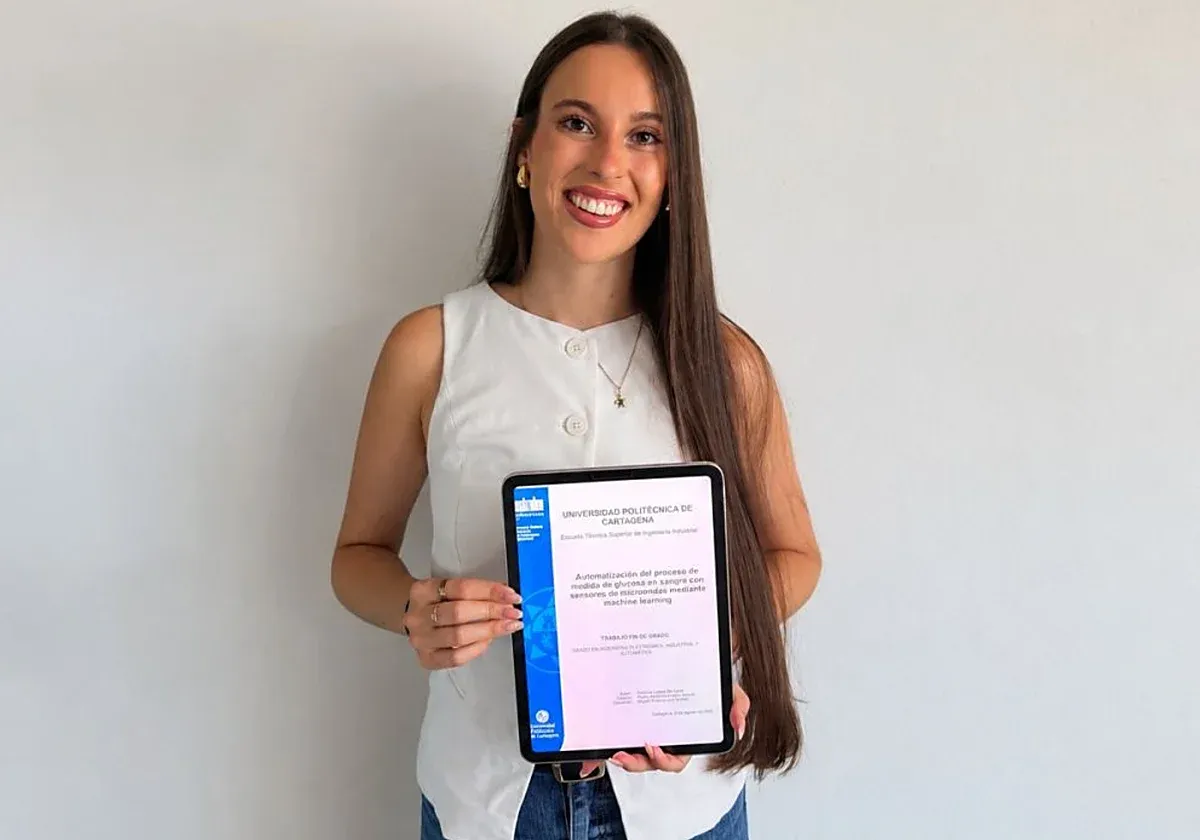
That is why the work of a young Spanish researcher who has developed a prototype capable of measuring glucose non-invasively and which has achieved an accuracy of over 96% in the tests carried out has particularly caught my attention.
The most interesting thing is that this project was born from an experience very close to diabetes.The researcher decided to focus her work in this field because her sister has type 1 diabetes and she knew first-hand the discomforts, limitations and concerns of living with the disease day after day.
The device uses a technology based on the analysis of the properties of biological tissues using an open loop resonator.Simply put, it attempts to estimate glucose levels without needing to obtain a blood sample or use a sensor implanted under the skin.
In addition, the system incorporates machine learning algorithms that combine electronic parameters and physiological variables to improve the precision of measurements.During its clinical validation, carried out in two public hospitals in Alicante, the results obtained were compared with traditional blood glucose analyses, reaching clinical accuracy levels greater than 96% in controlled environments.
[[ERROR-TRANS]]Otro aspecto muy interesante es el económico. Actualmente, muchas personas con diabetes dependen de sensores que deben sustituirse periódicamente, lo que supone un coste recurrente importante para los sistemas sanitarios y para quienes tienen que asumir parte del gasto. Esta nueva propuesta concentra la inversión principalmente en el dispositivo inicial, reduciendo la necesidad de consumibles y sensores desechables.
Of course, it is advisable to be cautious.Achieving good results in clinical studies is a fundamental step, but there is still a long way to go before a technology of this type can reach routine clinical practice.The results will need to be validated in larger populations, under real-life conditions and over long periods.
Even so, news like this shows that diabetes research continues to advance and that there are teams working to make our lives a little easier.Just a few decades ago we depended exclusively on glucometers and multiple daily injections.Then came continuous sensors.Now, the possibility of measuring glucose without piercing the skin no longer seems like such a distant idea.
As a person with diabetes, I am encouraged to see that innovation continues to focus not only on improving clinical outcomes, but also on reducing the physical and emotional burden of daily management of the disease.
Do you think we will see completely non-invasive monitoring systems in the coming years?
Would it be an important change for you or do the current sensors already cover your needs?💙