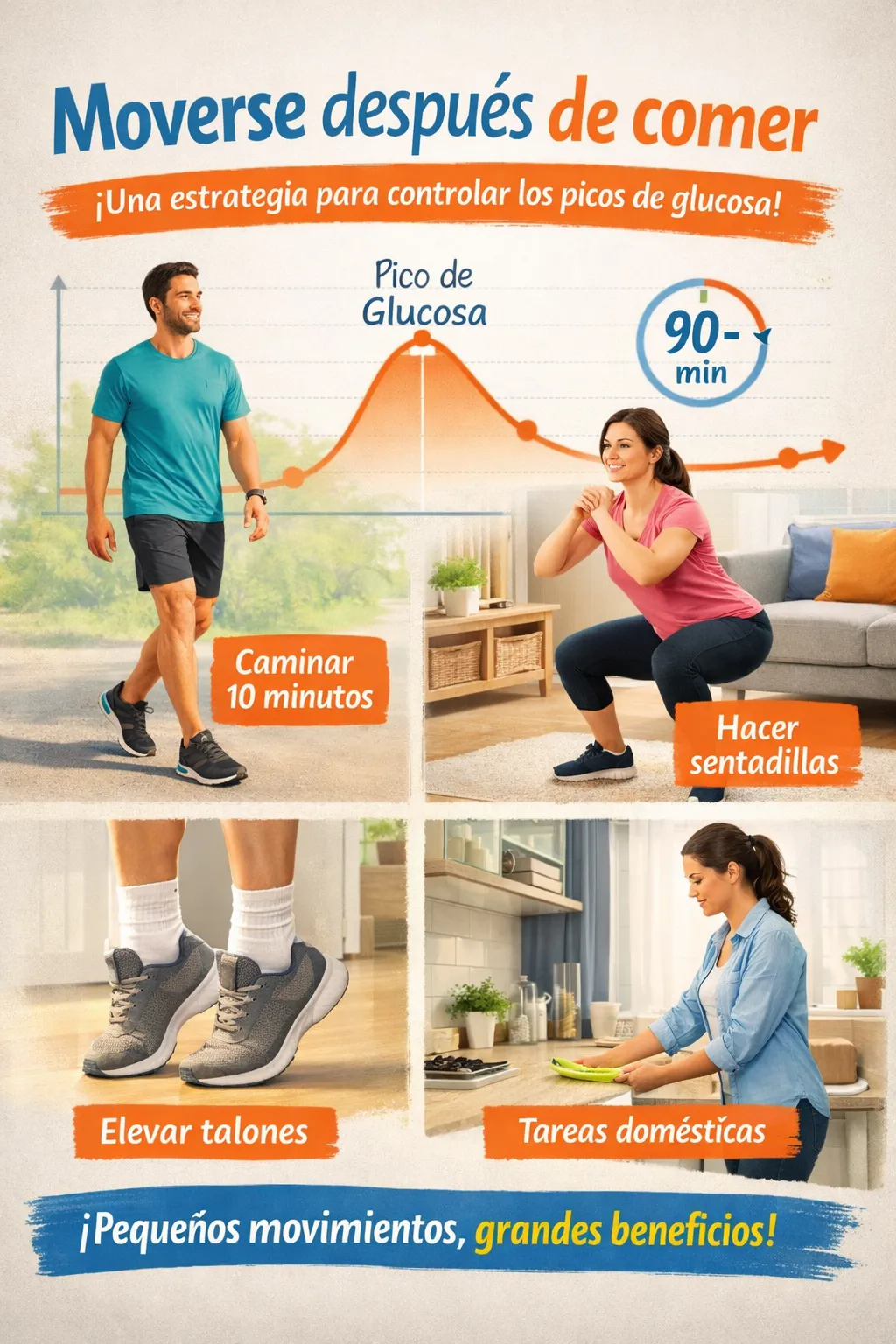

After a meal, it is normal for blood glucose to increase.In fact, as explained by the French biochemist Jessie Inchauspé, known online asGlucose Goddess, the glucose level usually peaks approximately90 minutes after finishing eating.This occurs in all people, not just those with diabetes, especially when the food contains carbohydrates such as bread, pasta, rice or sweets.
When we eat these foods, the body transforms them into glucose that passes into the bloodstream.To manage this increase, the pancreas releasesinsulin, the hormone that allows glucose to enter cells and be used for energy.
The problem appears when these peaks are constantly repeated.Sudden increases in glucose can cause inflammation, increased insulin release, feeling tired after eating, and increased sugar cravings.Over time, this pattern is associated with increased risk ofinsulin resistanceand type 2 diabetes.
One of the most interesting mechanisms to dampen these peaks has to do with themuscles.When activated, they use glucose from the blood to produce energy.That is, when they contract, they help remove glucose from the bloodstream.
Additionally, during muscular activity the body can capture glucosewithout the need for large amounts of insulin, which reduces the load on the body.Therefore, even light activity after eating can have a positive impact on the glucose curve.
The most interesting thing is thatno need to do intense sports.Small everyday movements can make a difference.Among the simplest recommendations are elevating your heels for a few minutes to activate the calf muscles, taking a walk for about ten minutes after eating, doing short series of squats throughout the afternoon or simply spending a few minutes doing household chores such as cleaning up the kitchen or folding clothes.
These small “exercise snacks,” as some experts call them, help the body better process the carbohydrates consumed and smooth out the rise in glucose.
Many people who apply these strategies also notice immediate benefits:less sleepiness after meals, more energy during the day and fewer cravings for sweet foodshours later.
Scientific evidence has long indicated that regular physical activity improves insulin sensitivity and reduces cardiometabolic risk.Incorporating a little movement after eating can be, for many people, a simple and accessible way to take care of their metabolic health on a day-to-day basis.