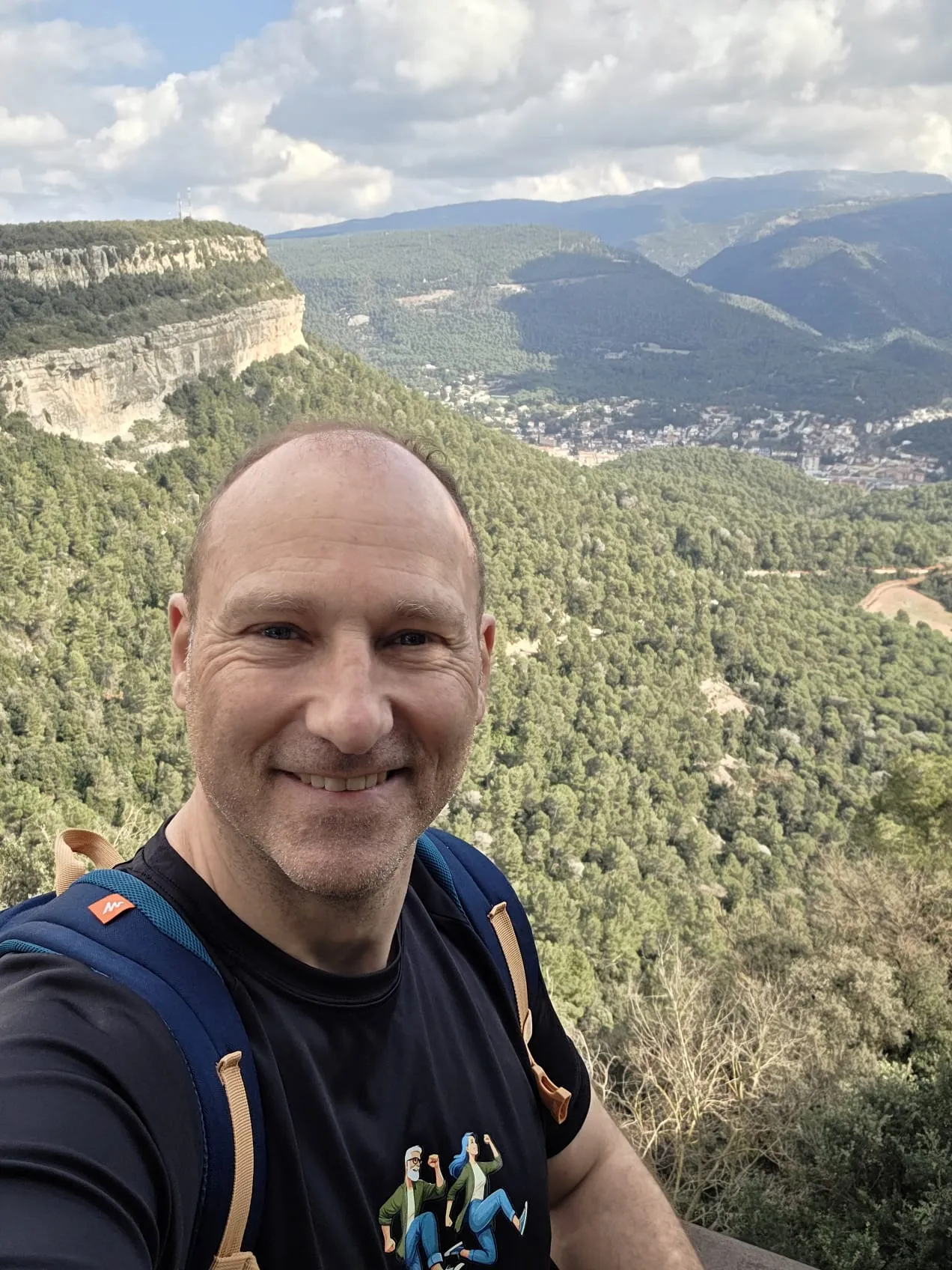
This weekend I did something that years ago I might have doubted whether I could do with diabetes: a 20 km route through the mountains, more than 5 hours walking, with significant elevation gain and real physical demands.
It has not been improvised.It has been planned.Thought.Tight.And yes, with some hypoglycemia along the way.
I wanted to share here not only the reel that I published on Instagram, but above all how I organized the start: how I adjusted the pump, how I managed the climbs, what I did when the first hiccup appeared, how I took advantage of the refreshment stations and what I carried in my backpack to feel safe.
Because playing sports with diabetes is not a matter of luck.It is a matter of preparation, experience and constant learning.
I'll tell you how the route was and what decisions I made during the journey 👇
🌄 Get up early, plan and anticipate
Getting up at 5:30 a.m. to have breakfast ahead of time before starting to walk already makes a difference.When we do long routes (5 hours and 20 km is not anything), the time beforehand is key: controlled breakfast, margin to see the trend and leave with some stability.
Coming out with glucose >200 mg/dl and still having a hiccup in the middle of the rise is something that many of us have experienced.The mountain does not forgive: the effort on the way up, the accumulated slope and the intensity cause glucose consumption to skyrocket.
And here is a very important point for everyone:
👉 Even if you start high, intense exercise can make you fall quickly.
👉 Anticipating the drop and correcting it with 20 g of glucose (4 5 g pills) was a perfect decision.
That's not luck, that's experience.
⛰️ Management during the route
Disconnecting the pump on the climb was a logical strategy due to the intensity of the section.Then, in softer areas, reconnecting in Easy-Off mode demonstrates something key: flexibility and constant adaptation.
The supplies were almost strategic:
Km 5: coke with sugar + chocolate shake → quick stabilization.
Km 10: cheese sandwich + 20-minute stop → more sustained recharge.
Last 5 km downhill → muscle fatigue, but stable glucose.
Here is another very powerful learning:
👉 It's not about making it perfect, but about reading the body and adjusting.
👉 The goal is not to avoid all hypos, but to manage them safely.
🎒 Preparation: the invisible key
“When I do sports, I always go prepared for hypoglycemia, they are inevitable.”
That's exactly what makes the difference.
Backpack with:
- glucose pills
- Gels
- Cookies
- Safety Extras (Glucagon)
Being prepared does not eliminate risk, but it eliminates fear.And that completely changes the experience.
💬 Why is sharing this here so important?
Because someone reading this right now may be thinking:“I couldn't do a 20 km route with diabetes…”And the reality is that it is possible.
- With planning.
- With experience.
- With community.
These types of posts help much more than it seems.They give real practical ideas, not theory.
If you are interested in sports, mountains, running or simply walking more, I encourage you to share how you manage it.We all learn together.
And if you want your partner, your friends or your family to understand what is behind something as “simple” as doing a mountain route with diabetes, I really recommend the book “Living with diabetes: The power of the online community”.It explains precisely this: the invisible part, the mental planning, the wear and tear, and also the enormous satisfaction of achieving it.
Because living with diabetes is not just about controlling numbers.
It is organizing a backpack, anticipating a hiccup in the middle of the climb and still enjoying the landscape.
Who is willing to share their next sporting experience?💙
Greetings,