As a person with diabetes, when I read that only 14% of Spaniards feel well informed about diabetes, it doesn't surprise me... but it does worry me.Because behind that data there are millions of people making daily decisions without sufficient information, families that do not fully understand what we are experiencing and a society that still associates diabetes only with “high sugar.”
In Spain there are more than 4.7 million of us living with diabetes.And we know that diabetes is not just a glucose figure: it is related to cardiovascular risk, kidney health, emotional well-being, our daily energy, and our quality of life.
And yet, three out of four people perceive that the information available is deficient.That's where we, as a community, have a huge role.
A study promoted by the UdG-Dexcom Chair, with the collaboration of the Spanish Diabetes Federation (FEDE), shows something very clear: society wants more prevention, more personalization and more technology applied to diabetes.
More than 90% of citizens support public health incorporating digital programs to promote healthy habits.And this, for those of us who use sensors, apps or continuous monitoring systems, makes all the sense in the world.
Continuous glucose monitoring
Technology allows us to anticipate, detect trends, adjust decisions and live with greater security.But the reality is that not all people with diabetes have the same access.And that generates inequality.
As the study points out, 9 out of 10 Spaniards believe that access to health technology should be based on clinical need and not on territory.And here, many of you know what I'm talking about: differences between autonomous communities, waiting times, different criteria...
Equity should not be a privilege.It should be a right.It's not just about trying.It is prevention.It is educating.
What strikes me most about the study is not only the 14% figure.It is the underlying idea: society wants to prevent, but does not know how.
And diabetes prevention begins with diabetes education.Start by understanding what hypoglycemia is, what HbA1c means, how exercise, stress, the menstrual cycle or an infection influence it.It starts by knowing how to read our own data.
This is where the forum makes even more sense.Because while the system evolves, we are already sharing real experience.We are solving doubts that do not appear in the brochures.We are accompanying those who debut.We are explaining what it means to live with diabetes on a daily basis, not just in the office.
If only 14% feel well informed, imagine the impact that an active, participatory and supportive community like ours can have.
Every message you write.Every experience you share.Every question you answer.
That's education.That's prevention.That's real support.
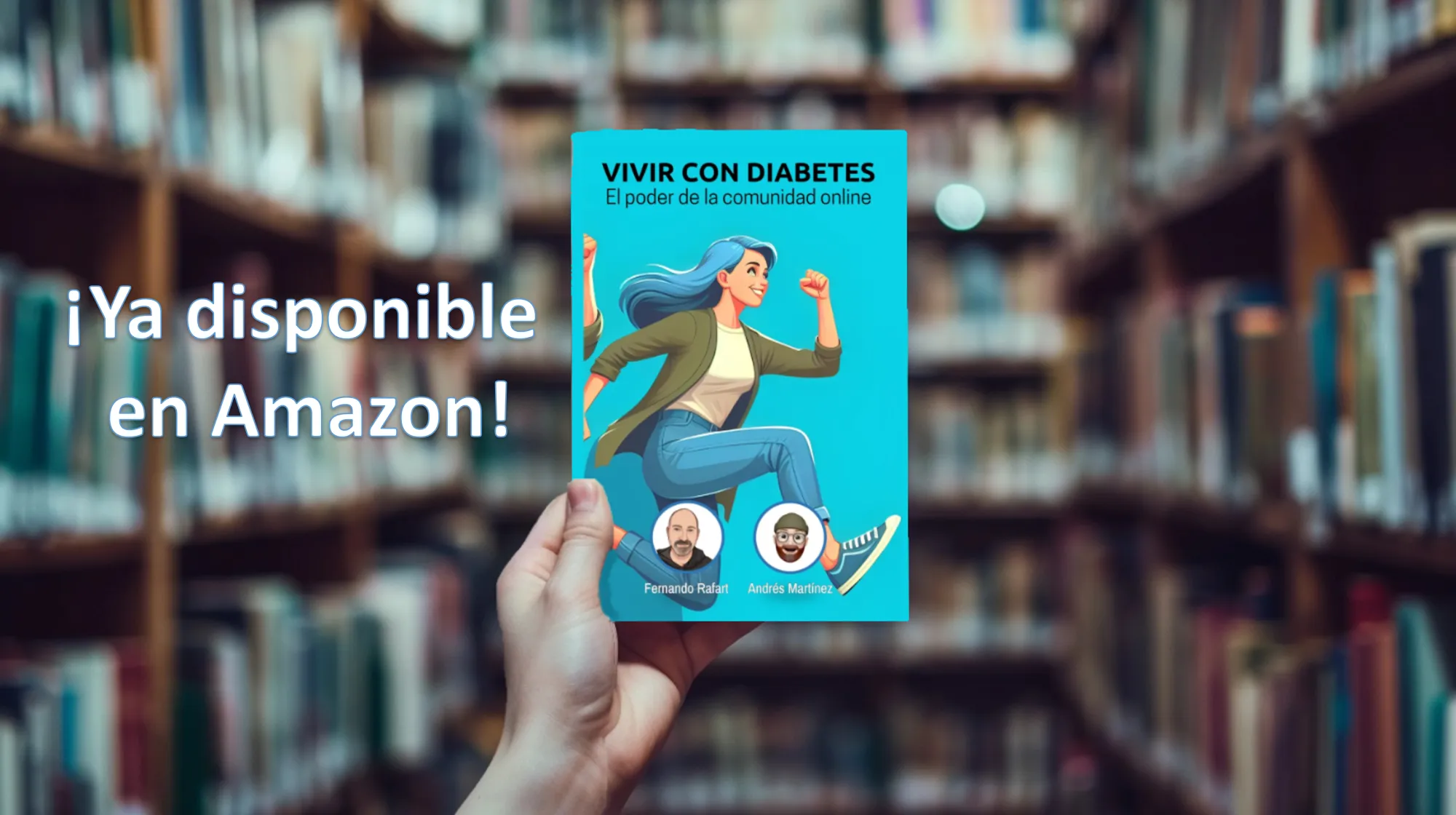
And that is why I also encourage you to read and give away the book “Living with diabetes: The power of the online community.”Because it includes precisely this: our experiences, our strategies, our way of supporting ourselves when the system does not always reach everything.It is a precious gift for a couple, for parents, for a friend who wants to better understand what it means to live with diabetes every day.
The more you understand our environment, the easier our path is.
👉 Do you feel well informed about your diabetes?
👉 Do you think that technology is reaching those who really need it?
👉 What do you think is missing for prevention to be a reality and not just a slogan?
Let's continue making the forum a reference place.Because if information is power, community is strength.